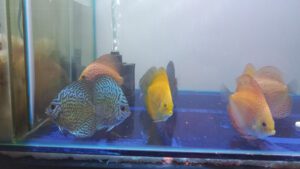
Fish in the sea or river can migrate to the warm waters, but outdoor pond fish have to survive the harsh winter at the same place.
If you build a top-notch backyard pond but the fish inside cannot survive winter conditions, then what’s the use of it? Knowing the fish type of the utmost importance.
8 Fish Types That Can Survive Winters
Check out the list of fish that can survive freezing temperatures because of their hardy behavior.
Koi and Goldfish
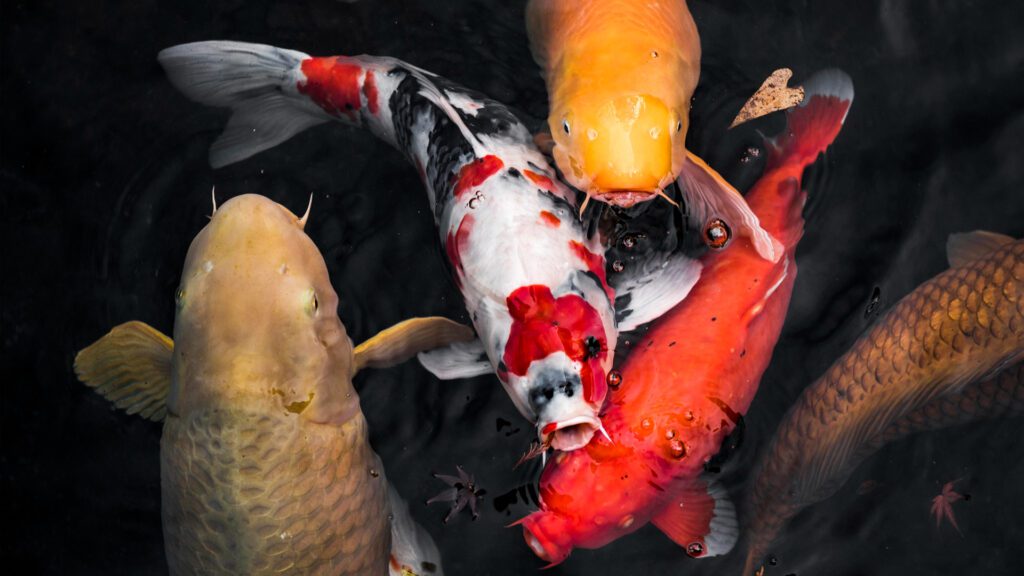
Koi and Goldfish belong to the Carp family. They are the most popular pond fish that can survive winter. Their appearance and glow add beauty to the pond’s aesthetics.
Koi fish, in particular, is non-aggressive. If you keep them with smaller fish mates, you don’t have to worry about them being eaten by Koi fish.
Goldfish is a less expensive option if you can’t afford Koi Fish. Their characteristics are almost the same as Koi fish.
Archerfish
Another attractive fish that increases the beauty of your pond is the Archerfish. Archerfish have a strong tendency to survive cold climates. Their silver bodies with black stripes bring a unique shine to their appearance.
Redear Sunfish
Redear sunfish, as the name suggests, have striking red ears. They can easily live through cold temperatures. The best part is that these fish like to eat snails and insects, which automatically helps maintain your pond.
Pumpkinseeds
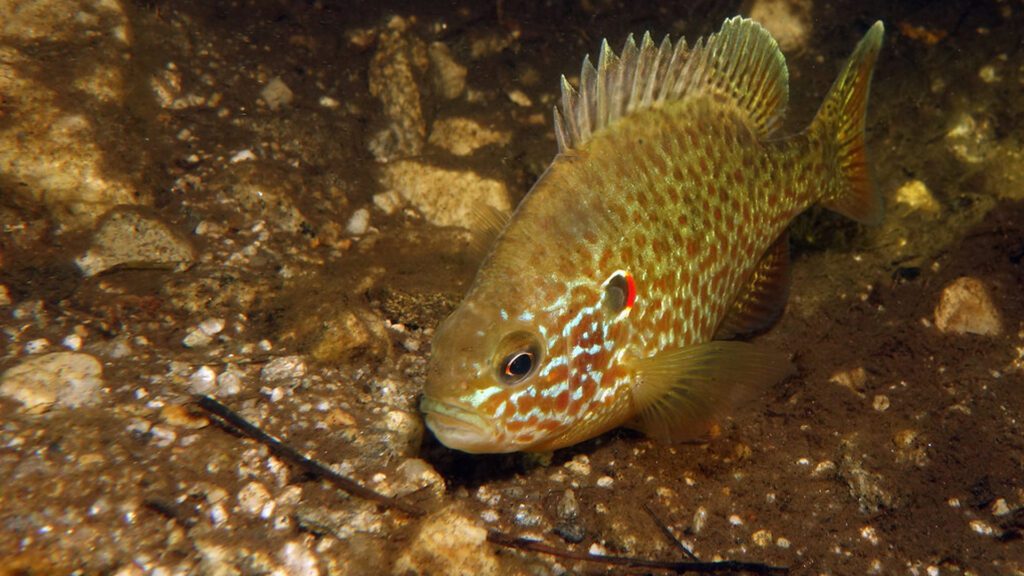
Pumpkinseeds are easy-to-care fish for your pond. You will find them hyperactive during afternoon. That’s the time they are looking for larvae and worms.
Bluegills
The fish you often see in the shallow water areas where the plants are placed, that’s Bluegill for you. They are part of the sunfish family. Bluegill fish are greenish-brown from the back and yellow from the bellies.
Fathead Minnows
Fathead Minnow’s addition to your backyard pond means you don’t need to worry about cleaning it. They thrive on algae and water insects. Also, they stay active for a long time and get comfortable with other fish mates easily.
Golden Rainbow Trout
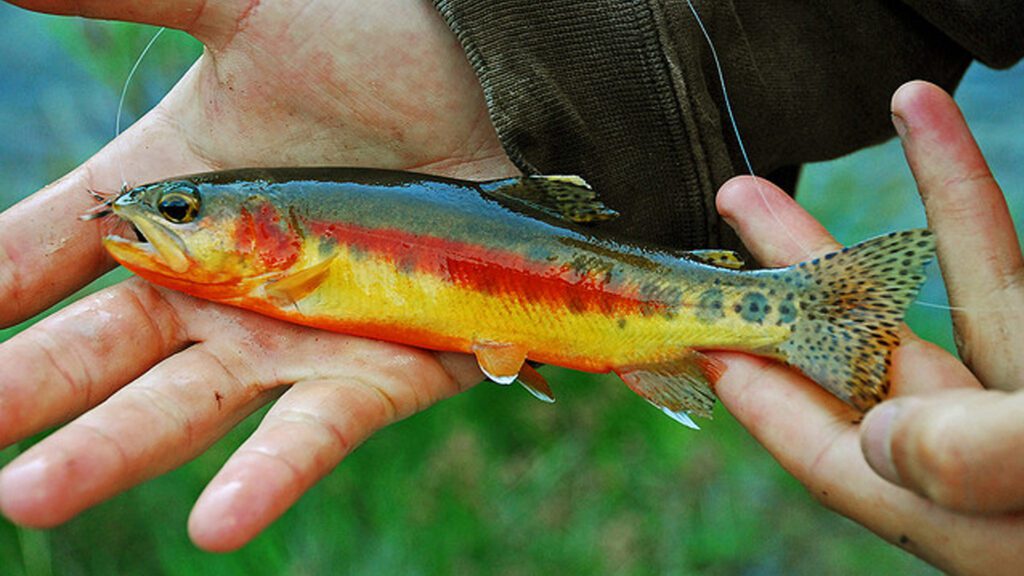
Golden Rainbow Trout are good at surviving the winter. In fact, they wait for winters because the other fish species will get to the bottom of the pond, and they can easily hunt them.
What Do Pond Fish Do In The Winters?
When winter gets in full swing, the top level of water becomes extremely cold. At the same time, water at the bottom of the pond becomes warm.
All the fishes move to the bottom. Some fishes go dormant, like frogs and other amphibians, but mostly, these fish go for a winter rest.
One thing to note is that if too much snow and ice cover the surface, harmful gases can get trapped beneath the layer of ice. This can suffocate your fish and lead to death.
How Can Pond Fish Survive The Winter
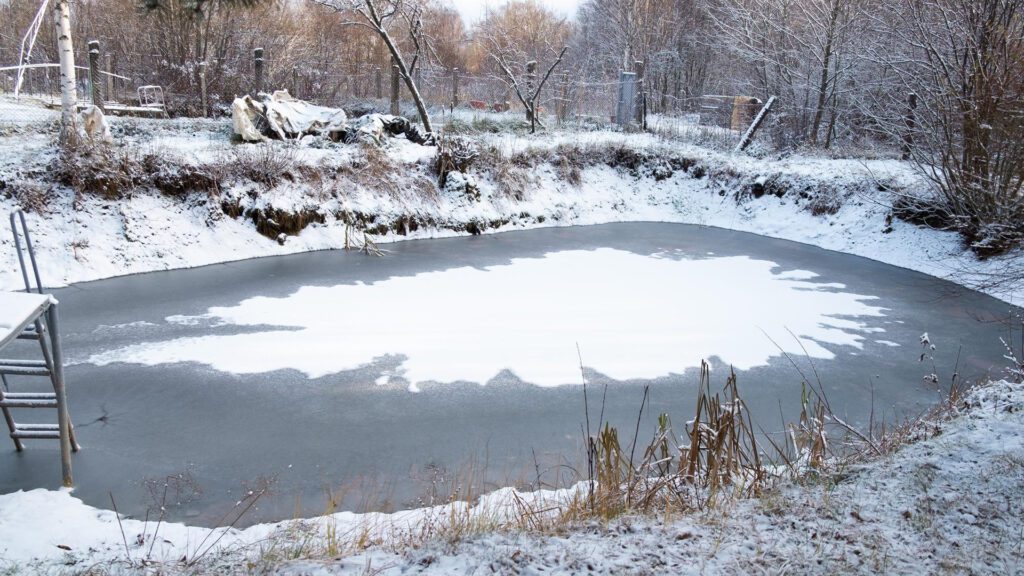
Here are important tips for your pond fish in the winter.
Take Them Inside
Your pond must have many fish species. Some can survive winters, some cannot. In this scenario, it’s better to have a fish tank inside your home, where you can keep your fish for some time.
Ice Hole
In winter, when your pond’s water surface becomes ice, dig a hole in the ice. This will help adequate oxygen enter the ponds, which is necessary for survival. You can use a floating heater for this purpose.
Cut Down Feeding
Ensure that you feed your fish a much less-than-adequate amount every day. Fish have a low metabolism and are less likely to eat much. The leftover food might create more carbon dioxide, which is deadly for your fish.
Winterizing The Pond
It is recommended that you winterize your pond by cleaning it thoroughly. I suggest doing it before the winter starts.
Do Fish Go In Hibernation Mode?
No, fish don’t hibernate since they are cold-blooded. The term used for fish hibernation mode is Torpor. Fish also experience conditions similar to those of warm-blooded animals.
As soon as the temperature drops, fish try to conserve energy by lowering their metabolism. This is their effort to survive the cold water conditions.
The basic difference between hibernation and Torpor is that fish face can do this for a minimal amount of time. During Torpor, all the fish activities are on a snooze for a few weeks, unlike other animals that can sleep throughout the winter.
Conclusion
You might have stunning backyard pond surroundings, but the fish species are the main attraction. Don’t compromise the life of your fish, and take all the possible steps to ensure they survive winters without any hassle.