A spotted molly, hence known as a “Dalmatian,” is a peaceful fish that can be a great addition to your aquarium. Read this care guide to learn more about this beginner-friendly fish and how to keep it healthy.
Origin & Habitat
The Dalmatian molly, classified under the Poeciliidae group, is found in the Southeastern United States. It is a freshwater fish that lives in continental and tropical wetlands, streams, aquatic reservoirs, and seas.
Mollies are resilient and can even live in brackish saltwater under optimal water conditions. They require vegetation and a small school of fish to hide and breed comfortably in an ideal habitat.
Lifespan
This species can live up to 5-6 years in natural conditions and surpass 10 years when kept under optimal conditions in home aquariums. This makes it an ideal pet fish for beginners.
They can grow to 4 to 5 inches long (10-13 cm), and like most tetras, the female mollies are bigger and rounder than the males.
Appearance
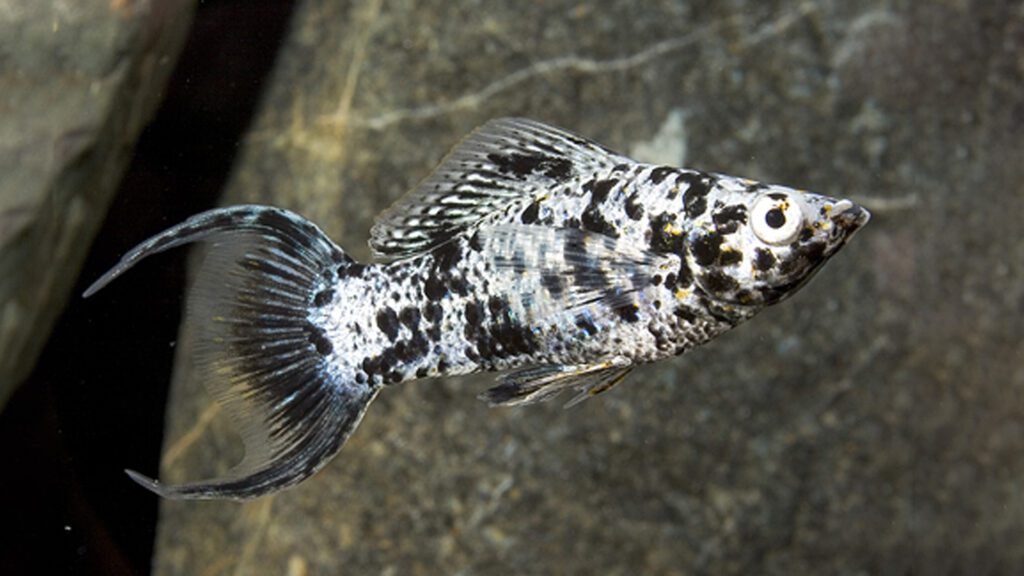
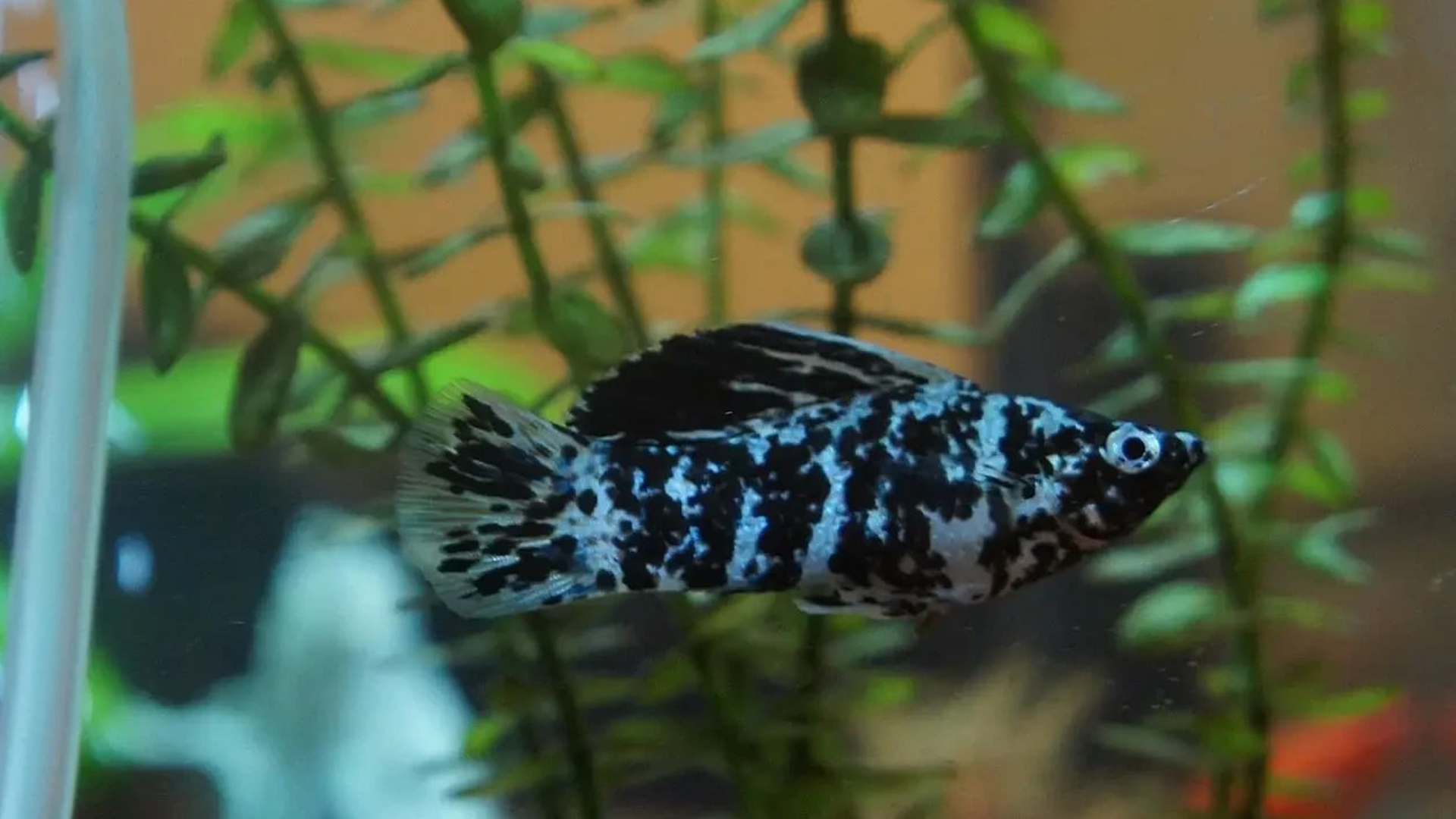
This energetic tropical fish is known for its distinct black spots covering the whole skin. The black and white dots are similar to those of Dalmatian dog fur.
They have a more streamlined body with fins. The females have more heart-shaped fins, while males have slightly pointy fins.
Temperament
Mollyfish are happy, attractive fish that get along well with other species. They are fast and active swimmers but can become anxious and fierce when exposed to large predators or sudden environmental changes.
They require a bigger space for their well-being, which helps them hide and find their food on their own. They usually spend most of their time on the bottom or the middle of the tank, staying active throughout the day.
Ideal Breeding Conditions
When ready to breed, male mollies develop an intense color than females, attracting them. The males also get swollen, developing bumps on their anal fins. Since mollies are livebearers, they give birth to baby mollies that can swim once they are out.
For ideal breeding conditions, make sure to have at least two females for one male to give them a break from constantly producing offspring. A baby fish might arrive in around two months, but it can also happen sooner.
A new female can produce 20 fry, while a veteran can produce around 50 in one go. Once the fry are out, add more plants and also give hiding spots to increase the babies’ survival rate.
Water Conditions
Dalmatian mollies thrive in higher oxygen levels and a ventilated tank. They prefer water temperatures from 74 to 81 ℉, a tank filtration system, and a heater.
When keeping large mollies in a home aquarium, they require 30 gallons or more of water to roam around freely and hide. However, small fish may thrive in 20 gallons of water.
I personally love adding large amounts of plants as it protects the mollies from strong water currents.
Feeding & Diet
Mollies are omnivores, enjoying both plants and meat. In the wild, they prey on small crustaceans, insects, worms, and algae.
To fulfill their supplementary needs, pet mollies can be fed a variety of foods, such as high-quality frozen foods, brine shrimp, pellets, flakes, and other live foods.
Mollies are a beast when it comes to diet. They’ll eat every time they’re fed, but you should only feed them twice a day to avoid constipation and other health issues. If your molly has a more balloon like belly, it’s a sign that you are overfeeding it.
Potential Diseases
Mollies are highly tolerable and resistant to most diseases. Yet, water quality and pH levels can expose them to various health conditions, such as swim bladder disease, white spot disease, shimmies, and Trichodina.
To prevent your molly from these diseases, it’s important to maintain ideal water, pH, and mineral levels. You should also filter at least 10% of the tank weekly to promote fish well-being and avoid leaving excess food in the water, which leads to poor water quality.
Predators
Though X-ray Tetras are known to protect themselves from predators because of their skin, dalmatian mollies become the target for the same reason. Their bright and unique pattern helps large fish prey on and spot them from afar.
Most fry are also eaten by their parents or other species, like guppies, which reduces their chances of survival.
Compatible Tank Mates of Dalmatian Mollies

Dalmatian mollies pair best with small fish that are active like them and stay on the surface or middle of the tank.
Suitable mates include:
Other variants of mollies, such as Yucatan molly and Shortfin molly
Rosy barbs
Small tetras
Pethia conchonius
Dwarf gouramis
Swordtail
Guppies
Non-suitable mates include:
Minnows
Large cichlids
Goldfish
Dalmatian Molly Care: Aquarium Tank Requirements
The Dalmatian molly requires a spacious tank with an ideal temperature of 72 to 81 °F and a pH level of 7.0-8.0. The bottom should be filled with fine gravel or sand substrate and vegetation to allow the fish to hide and play.
For the ideal water type, choose freshwater with a water hardness of 2 to 25 dGH. For specific breeding conditions, opt for bigger water tanks with an efficient filtration system and decorations.
Bottom Line: Should You Buy a Molly?
Dalmatian molly fish is found in South America and is known for its unique pattern. It is easy to care for and can live up to 10 years when kept under ideal conditions.
This hardy fish is easily available in pet stores and can be bred for sale as they make the perfect pet fish.